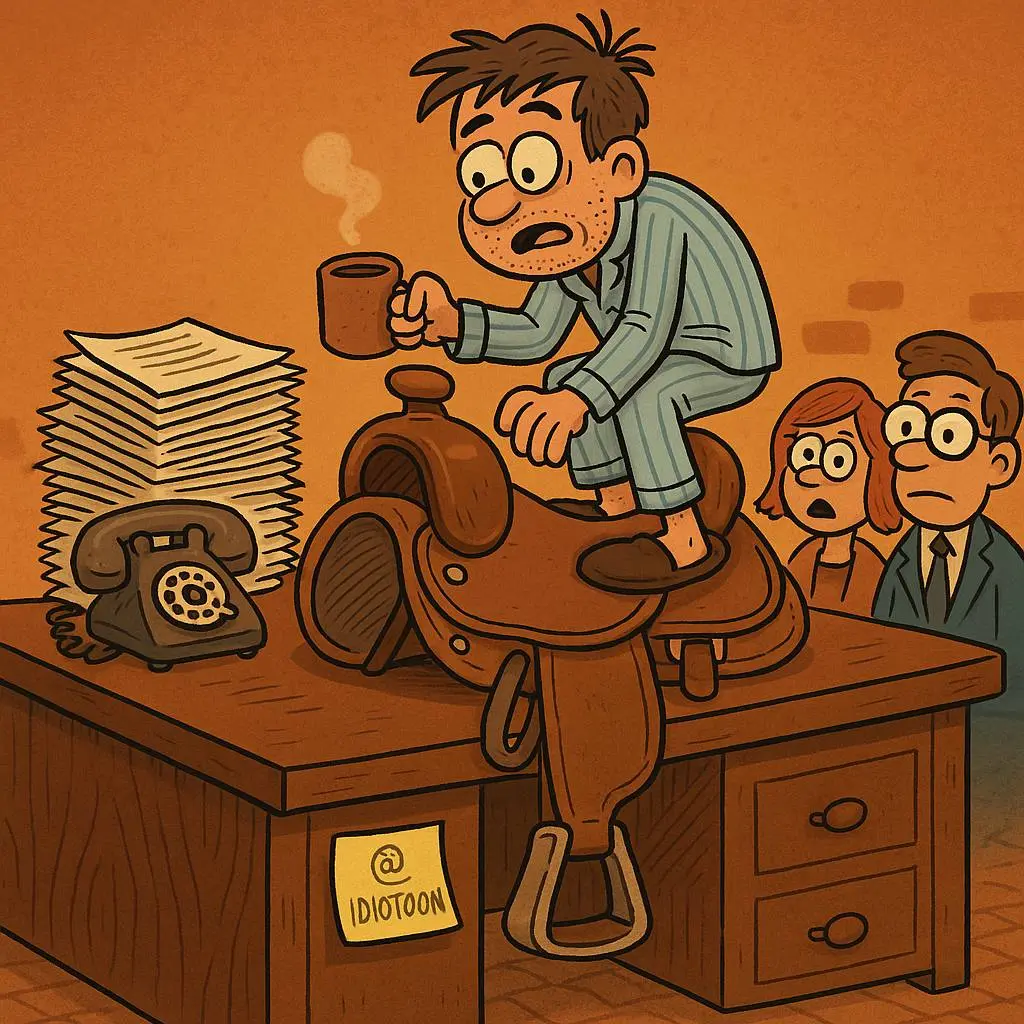
Back in the saddle
“Back in the saddle” means you return to something after a break and start again.
Meaning: Used when someone begins doing something again after stopping for a while.
Tone: Positive and motivating. It often suggests a fresh start or getting back on track.
Example: After a few months off, I’m back in the saddle at work.
Why: It comes from horse riding — after stopping or falling, you get back on the saddle and continue.
Register: Informal
How It Sounds in Real Life
After being away for a while, she felt a bit slow at first. But by the afternoon, she was back in the saddle.
I stopped training for months, but this week I’m back in the saddle and going to the gym again.
After the holidays, it’s hard to focus. But once you start, you get back in the saddle quickly.
Use it when…
- You return to work after a break.
- You restart a routine like studying or exercising.
- You continue after a pause or setback.
- You want to describe getting back on track.
Common Variations
- I’m back in the saddle.
- It feels good to be back in the saddle.
- She’s finally back in the saddle.
Quick Practice
- What is something you stopped for a while and then started again?
- Was it easy or difficult to get back in the saddle? Why?
- How long does it usually take you to feel comfortable again after a break?
- Finish this: “After a long break, I finally got back in the saddle and…”
Common Questions
Can I use “back in the saddle” at work or with my boss?
Yes, it’s natural in work situations. It sounds friendly and informal, so it’s fine in normal conversations, but in very formal situations you might say “I’m back to work” instead.
What’s the difference between “back in the saddle” and “back in business”?
Both mean returning after a break, but “back in business” sounds stronger and more confident. “Back in the saddle” focuses more on starting again, even if you’re still getting used to it.
Do you use “back in the saddle” after failure or just after a break?
You can use it for both. It works after a simple break (like holidays) or after something went wrong, when you start again.
Does it mean you’re fully comfortable again?
Not necessarily. It often means you’ve started again, even if you still feel a bit slow or out of practice at first.